
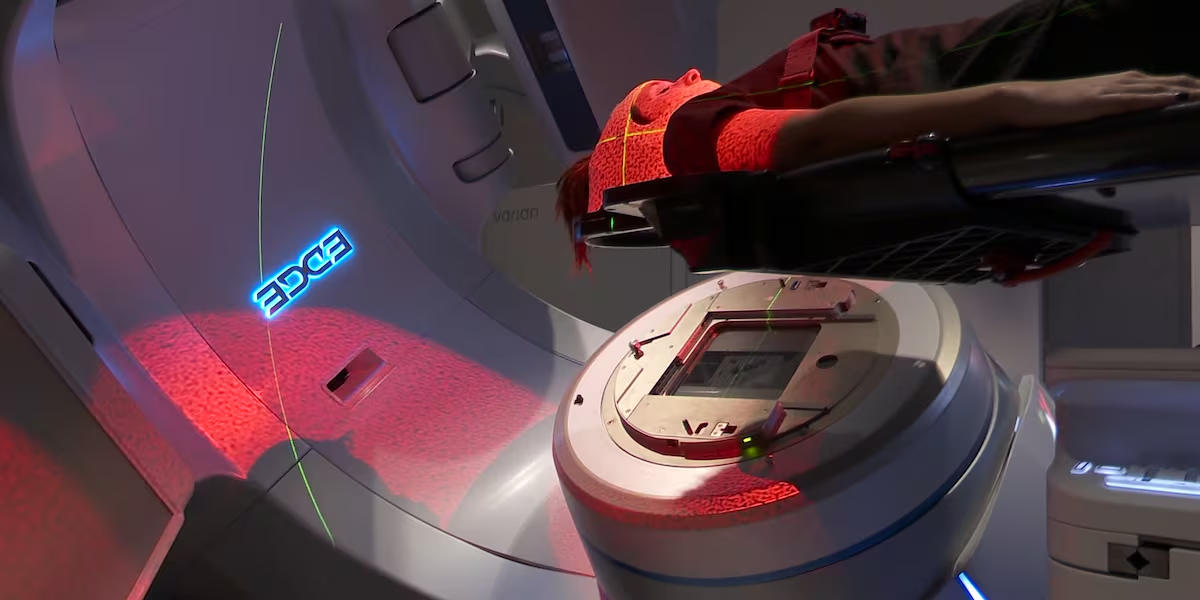
Types of Radiation Therapy
The right technique depends on where your tumor is, how it moves, and what's around it. Here's what we use — and why.
Jump to a technique
Accelerated Partial Breast Irradiation
APBI
Targeted radiation after breast surgery with fewer side effects and a much shorter treatment time.
APBI is an advanced form of radiation therapy often recommended after breast cancer surgery. It focuses high-dose radiation precisely on the area around where the tumor was removed, minimizing exposure to the rest of the breast, the lungs and the heart.
By limiting the treatment area, APBI reduces side effects compared with traditional radiation techniques — while still effectively destroying any remaining cancer cells. That precision allows your care team to safely deliver higher doses of radiation with confidence.
This evidence-based treatment has been adopted globally and continues to evolve as part of modern cancer care. One of its key benefits is speed: APBI can often be completed in just 5 to 10 days, helping you get back to your daily life sooner.
External Beam Radiation Therapy
EBRT
High-energy beams delivered from outside the body — non-invasive, painless, and the basis for most of what we do.
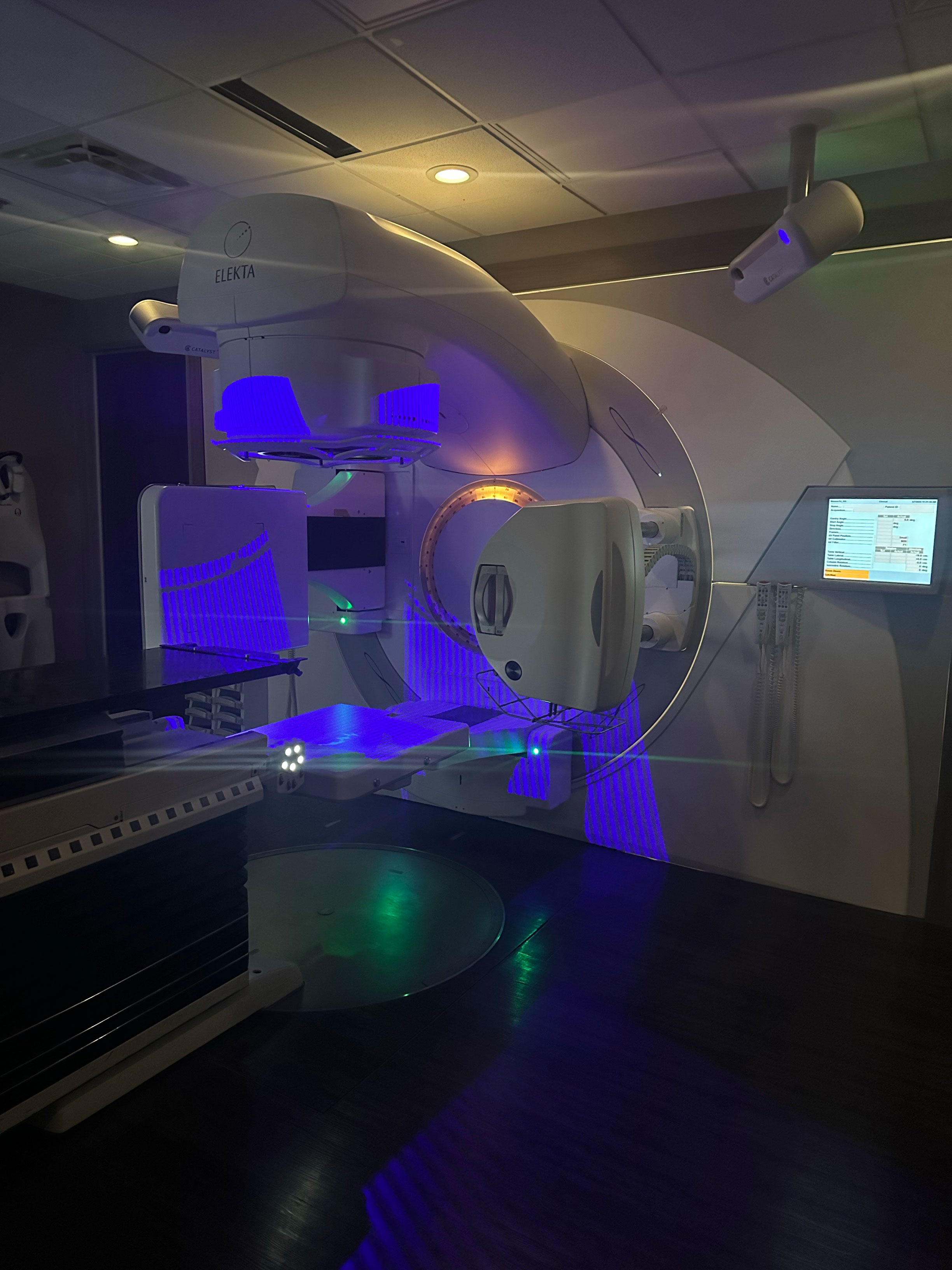
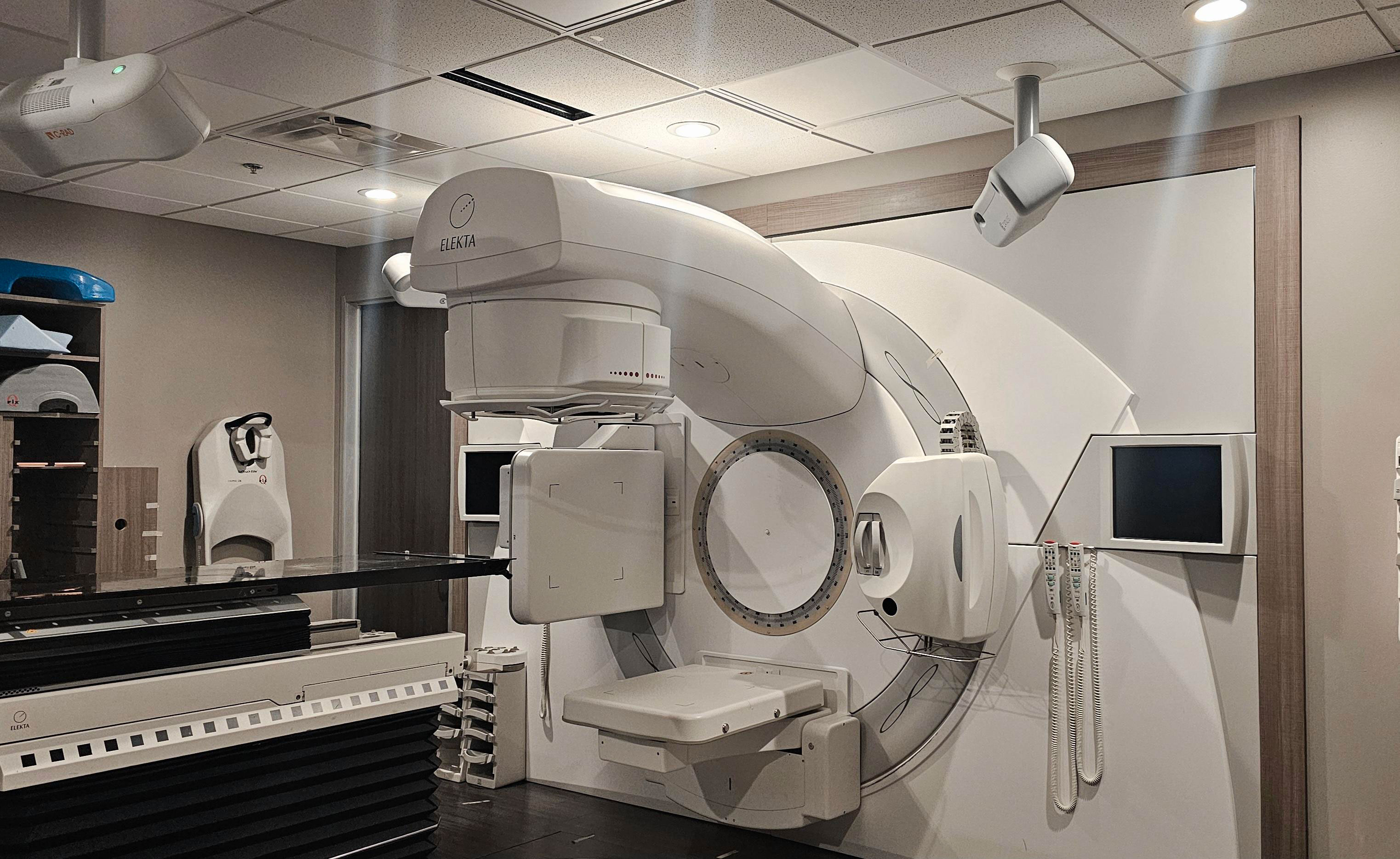
External Beam Radiation Therapy is a common and effective way to treat cancer using high-energy beams — usually X-rays — delivered from a machine outside the body. These beams are carefully aimed at the area where cancer cells are located, damaging their ability to grow and divide.
The treatment is completely non-invasive. You won't feel the radiation, and each session typically lasts only a few minutes. Your radiation team uses advanced imaging and planning tools to precisely target the cancer while avoiding as much healthy tissue as possible.
EBRT is used for many types of cancer and can be part of your treatment before or after surgery, or in combination with other therapies like chemotherapy.
Stereotactic Body Radiation Therapy
SBRT / SABR
Intense, pinpoint radiation to a small tumor — no surgery, no hospital stay, and a fraction of the sessions.
Stereotactic Body Radiation Therapy — also known as SABR — is a highly precise, non-invasive treatment that delivers intense radiation directly to a tumor while minimizing damage to surrounding healthy tissue. It's typically completed in just 3 to 5 sessions, with no surgery or hospital stay required.
SBRT is ideal for treating small, localized tumors or slowing the growth of cancers that have spread. Unlike conventional radiation, which may require up to 35 sessions and treats a broader area, SBRT focuses only on the visible tumor with pinpoint accuracy. That means fewer side effects and excellent tumor control in many cases.
Stereotactic Radiosurgery
SRS
Surgery-free, highly focused brain radiation that spares healthy tissue and preserves quality of life.
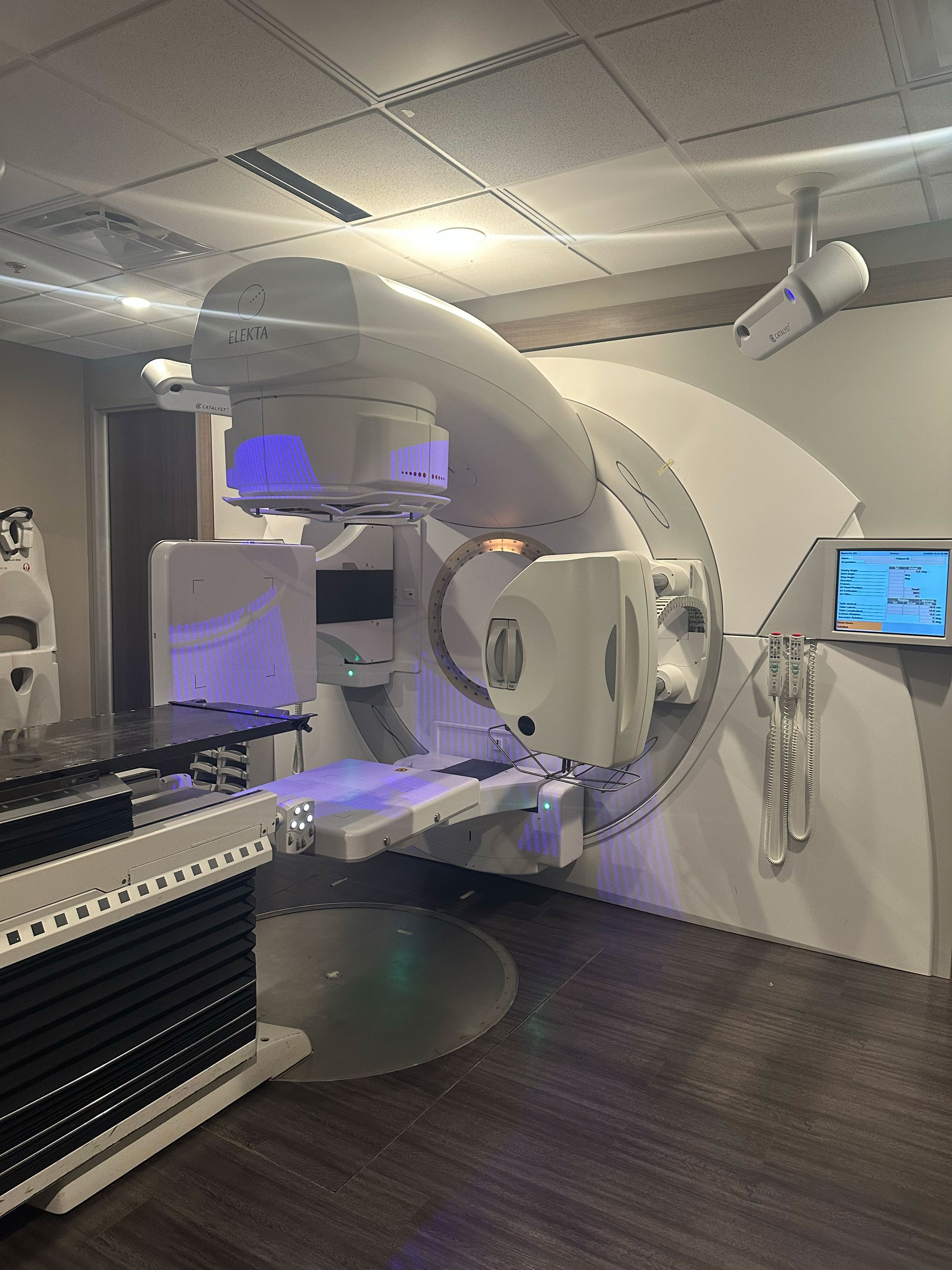
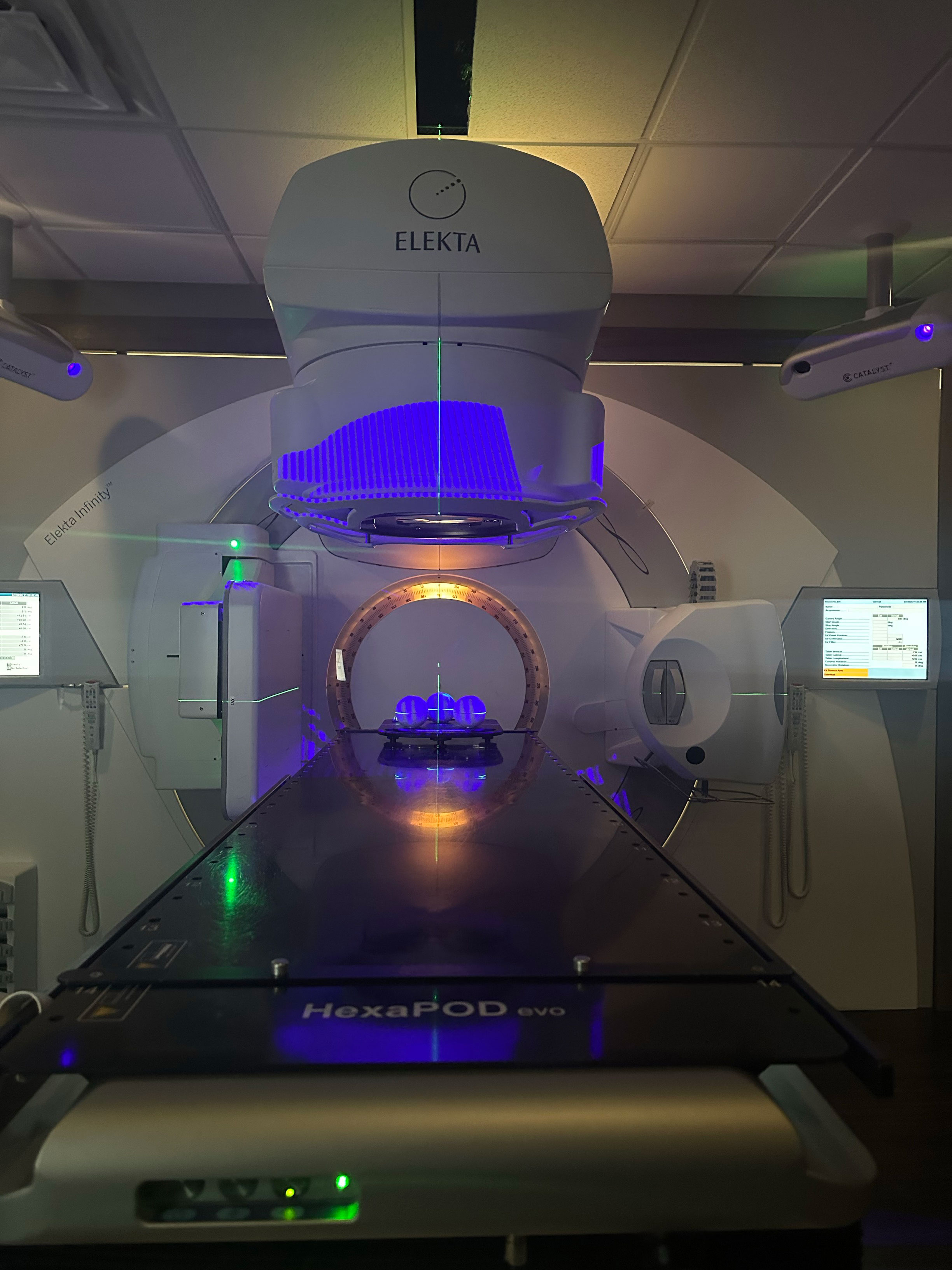
SRS is an advanced, non-invasive treatment for brain tumors and brain metastases. Despite the name, there is no incision. It delivers precise, high-dose radiation while sparing healthy brain tissue — helping preserve quality of life.
SRS is typically done on an outpatient basis and often reduces the need for surgery. For many patients it is completed in a single session.
Intensity-Modulated Radiation Therapy
IMRT
Computer-controlled beams whose intensity varies across the treatment area — higher dose to the tumor, less to everything else.
IMRT is an advanced form of radiation treatment that uses computer-controlled beams to precisely target cancer. The intensity of the radiation can be adjusted across the treatment area, allowing higher doses to reach the tumor while minimizing exposure to nearby healthy tissue.
IMRT is commonly used for cancers in areas where it's important to protect surrounding organs — such as the prostate, head and neck, or abdomen. Treatment is painless and delivered over several sessions, often as part of a broader cancer care plan.
Volumetric Modulated Arc Therapy
VMAT
IMRT delivered in a continuous arc as the machine rotates around you — same precision, less time on the table.
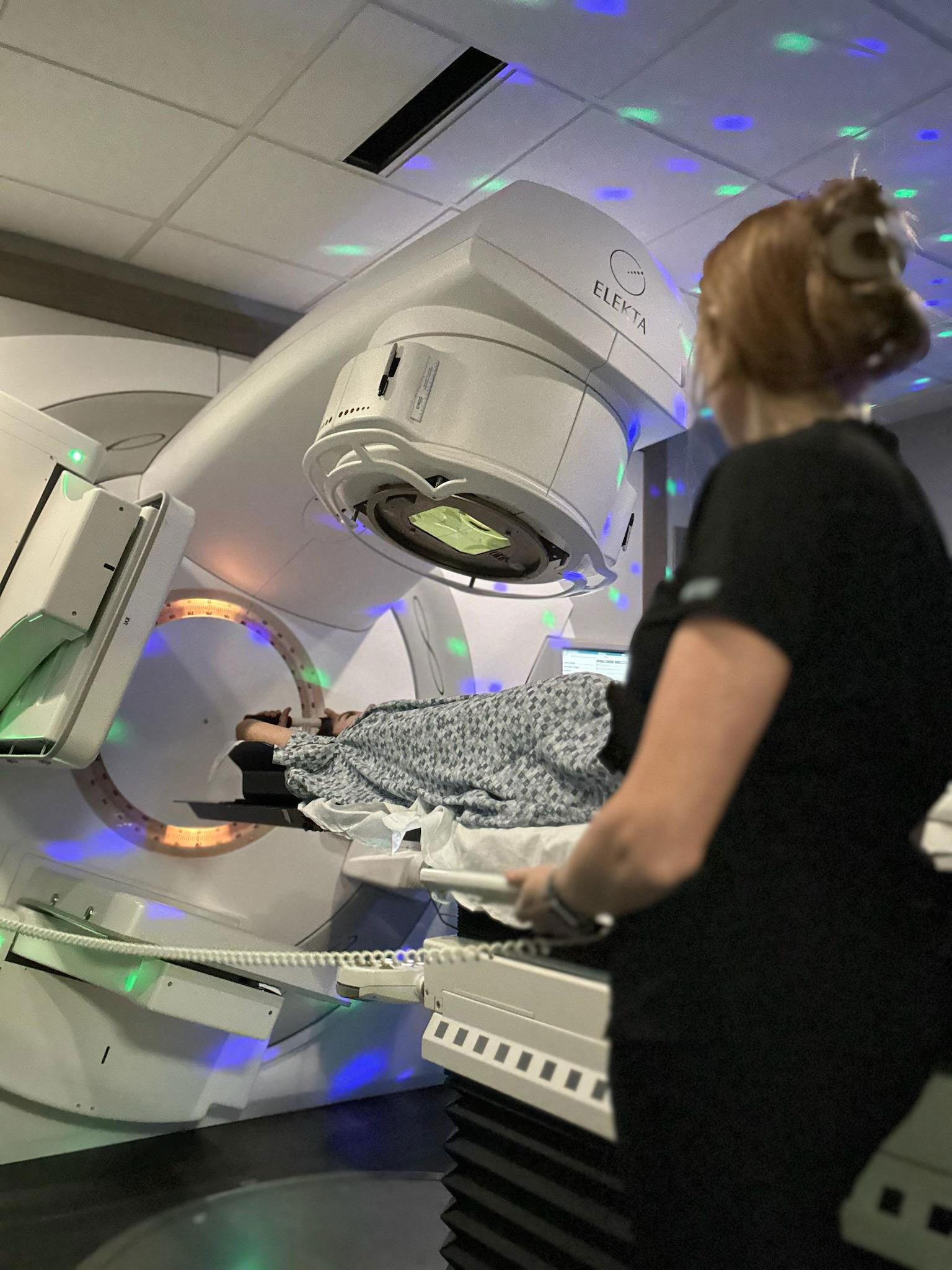
VMAT is an advanced type of radiation therapy that delivers treatment in a smooth, continuous arc around your body — rather than using fixed beams from different angles like traditional methods.
As the treatment machine (called a LINAC) rotates, it automatically adjusts the shape and strength of the radiation beam to precisely target your tumor. VMAT is a more advanced form of IMRT, designed to deliver highly accurate treatment while protecting nearby healthy tissue and organs.
One key advantage of VMAT is speed — because the machine doesn't need to stop and start to reposition, treatment sessions are often shorter. Like all IMRT treatments, VMAT is combined with image guidance so your team can visualize the tumor right before or during treatment.
Image-Guided Radiation Therapy
IGRT
Imaging before every treatment confirms the target hasn't moved — essential when anatomy shifts between sessions.
IGRT is an advanced form of external beam radiation therapy that uses imaging scans — such as X-rays or CT scans — to verify the exact position of your tumor before each treatment. This allows your care team to target the tumor more accurately while minimizing radiation to surrounding healthy tissue.
IGRT is especially useful for treating cancers in areas of the body that can move during or between sessions. It's commonly used for lung cancers, since the lungs move as you breathe, and for prostate cancers, where the prostate can shift depending on the fullness of the bladder or bowel.
By adapting to these movements, IGRT helps ensure precise treatment and better protection of healthy organs.
3D Conformal Radiation Therapy
3D-CRT
Beams shaped from 3D imaging to match the size and shape of the tumor itself.
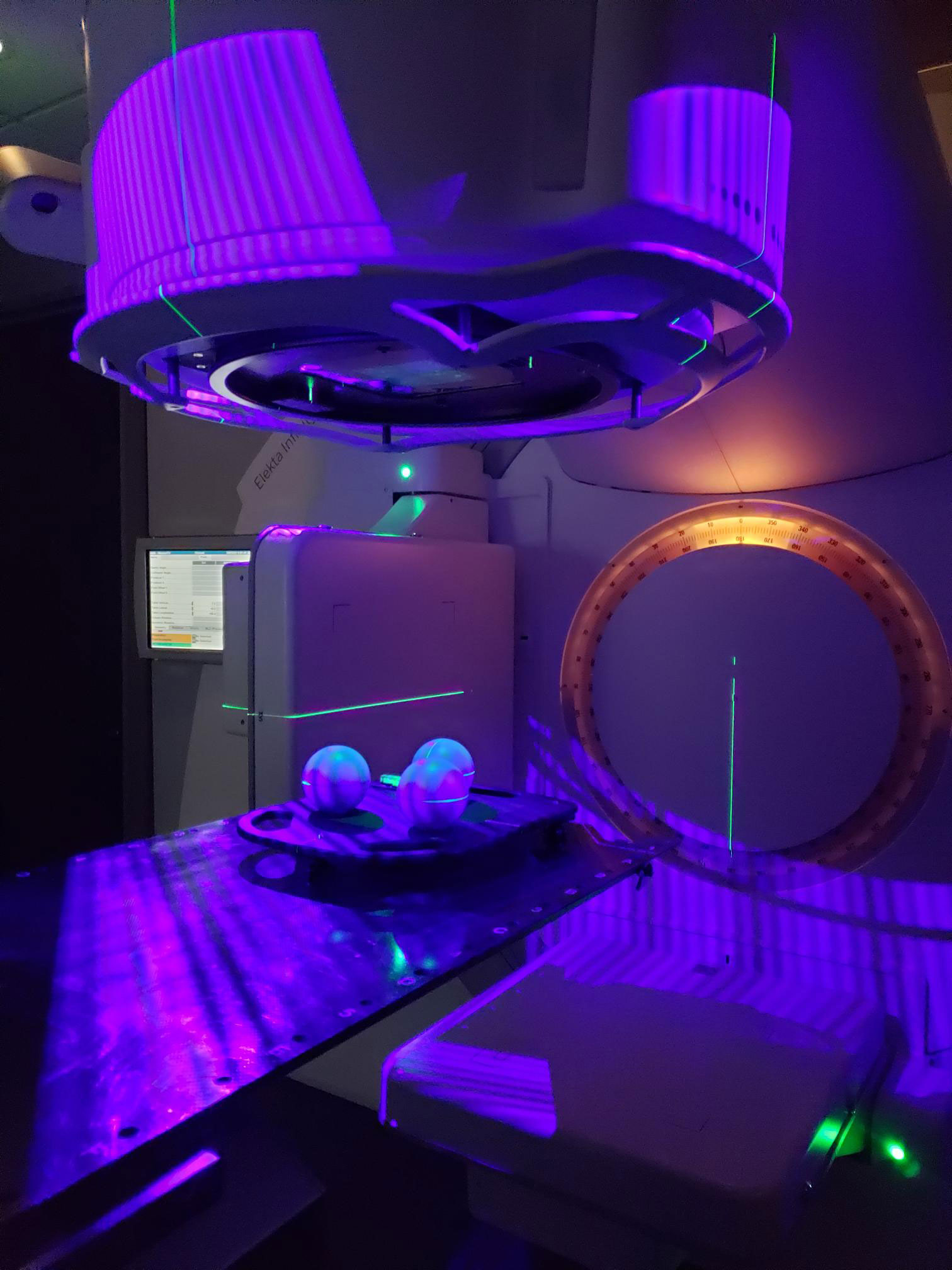
3D Conformal Radiation Therapy is a type of external beam radiation treatment that uses detailed 3D images of your body to shape radiation beams to match the size and shape of your tumor. This allows your care team to deliver radiation more precisely — directly to the cancer — while limiting exposure to the healthy tissue around it.
3D-CRT is commonly used to treat a variety of cancers and is often part of a personalized treatment plan. It's a painless, non-invasive procedure usually delivered over several sessions.
By using 3D imaging such as CT or MRI scans, your treatment is carefully planned to maximize effectiveness and reduce side effects.
What makes the precision possible.
Surface-Guided RT (SGRT)
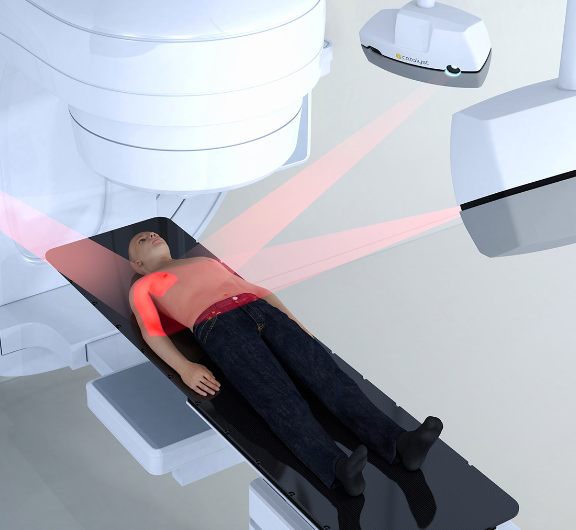
Optical monitoring tracks your body's surface in real time and pauses the beam if you move outside tolerance. It also means fewer permanent skin marks.
Deep Inspiration Breath Hold
For left-sided breast treatment, holding a breath moves the heart away from the chest wall. Simple, and it meaningfully reduces cardiac dose.
CT Simulation
Before treatment begins, a planning CT maps your anatomy in three dimensions. Everything that follows is built on that scan.
Want to know which technique applies to you?
Bring your imaging and your pathology report. We'll walk you through the plan and the reasoning behind it.