
Esophageal Cancer
Esophageal cancer often shows up first as trouble swallowing. Mission Oncology Partners treats it with radiation therapy, on its own or alongside surgery and chemotherapy.
About esophageal cancer
The esophagus is part of the upper gastrointestinal tract, and like the stomach it is susceptible to cancer. The American Cancer Society estimates about 17,000 new cases of esophageal cancer are diagnosed in the United States every year.
Family history, poor diet and the use of tobacco and alcohol are among the common contributing factors. Upper GI cancers can affect any gender or age range, but they are more common in people over the age of 55. If you have a history of damage to the lower portion of your esophagus — commonly called Barrett's esophagus — you may be at higher risk.
Routine screening for esophageal cancer is not typically recommended, because most early warning signs are minor gastrointestinal symptoms that can also be caused by other, far less serious conditions. That makes it worth paying attention to symptoms that persist.
Signs and symptoms
The early signs of esophageal cancer usually affect eating or digestion, which often shows up as a change in diet or appetite.
- Difficult or painful swallowing
- Pain in the chest
- Sudden or unexplained weight loss
- Chronic coughing
- Blood in the esophagus
When to call
These symptoms have many possible causes, most of them not cancer. But they are worth a conversation. If something has changed and hasn't resolved, contact your primary care physician — early evaluation is what makes treatment straightforward.
How we treat it
The recommended treatment varies with the stage and type of cancer and your overall health. The common treatments are surgery, chemotherapy and radiation therapy. Some patients receive a combination in order to make treatment more effective or improve the chance of a cure.
External beam radiation therapy
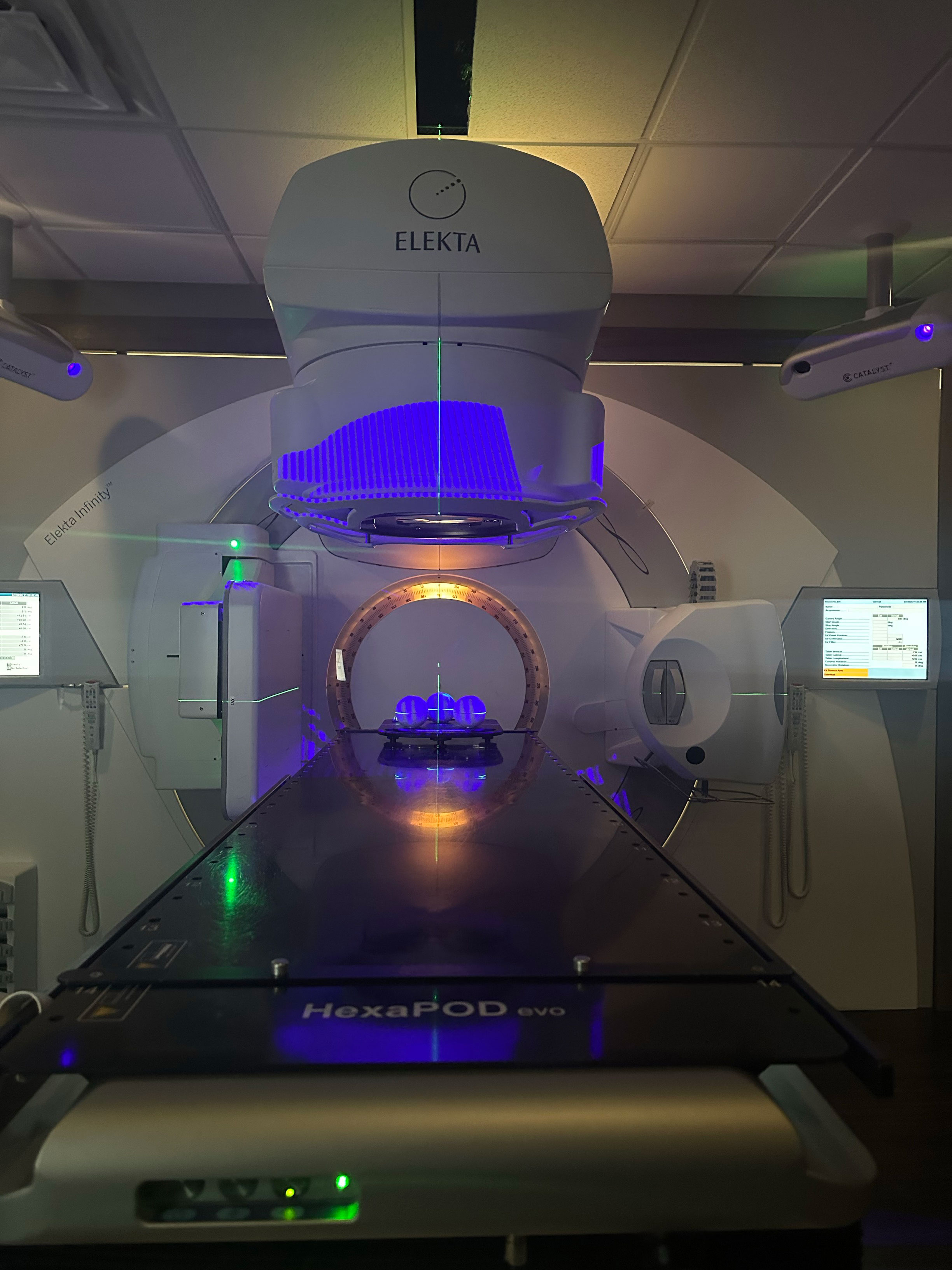
This is the most common form of radiation treatment for esophageal cancer. A machine outside the body creates powerful beams of radiation that can be targeted with a high degree of precision, and your radiation oncologist aims that beam at the affected area. When radiation reaches a cancer cell it stops the cell from multiplying and spreading, and the damage eventually kills the cell off, because cancer cells cannot regenerate.
Radiation combined with chemotherapy
Many esophageal cancer plans pair radiation with chemotherapy so the two work together — one treating the tumor directly, the other treating the body more broadly. Your physicians coordinate the timing so the combination is as effective as it can be.
Radiation before or after surgery
Radiation may be given ahead of surgery to shrink a tumor, or afterward to treat what surgery could not reach. Your physician will tell you plainly which sequence your case calls for and what each step is meant to accomplish.
What treatment involves
The duration and frequency of treatment vary from person to person. Your physician sets the details of your course based on your stage, your anatomy and your overall health, and will walk you through the schedule before you begin.
Treatment does affect a small amount of the healthy tissue around the cancer. Those healthy cells regenerate effectively over time as you go through a short period of recovery — something cancer cells cannot do, which is what makes the treatment work.
Possible side effects
Side effects are usually temporary and typically resolve shortly after treatment ends. Tell your care team about any discomfort — managing it is part of the treatment, not an interruption to it.
- Side effects vary case by case and depend on which treatments you receive
- They can be harder to predict if you are receiving more than one type of treatment
- Most side effects can be managed with diet adjustments or medication
- Tell your physician or nurse about anything you feel — they can help you get relief
Caring for yourself during treatment
- Rest when you need to, and don't hesitate to ask for help.
- Follow your care team's advice — and ask when anything is unclear.
- Tell us about every medication, vitamin and supplement you take.
- Eat a balanced diet and drink plenty of fluids.
- Treat skin in the treatment area gently: no sun, no hot or cold packs, and only lotions your team has approved.
- Lean on support groups, family and friends. Coping is part of treatment.
Trusted resources
- Esophageal Cancer Awareness Association — www.ecaware.org
- No Stomach for Cancer — www.nostomachforcancer.org
- RT Answers (patient brochures) — www.rtanswers.org
Clinical background adapted from materials by the American Society for Radiation Oncology (rtanswers.org) and the American Cancer Society.
Cancers We Treat
Talk to a Physician
Most new patients are seen within a few days of referral. Bring your questions — we'll make time for them.
Request an appointmentDiagnosed with esophageal cancer?
Talk with a board-certified radiation oncologist about whether radiation therapy belongs in your treatment plan.