
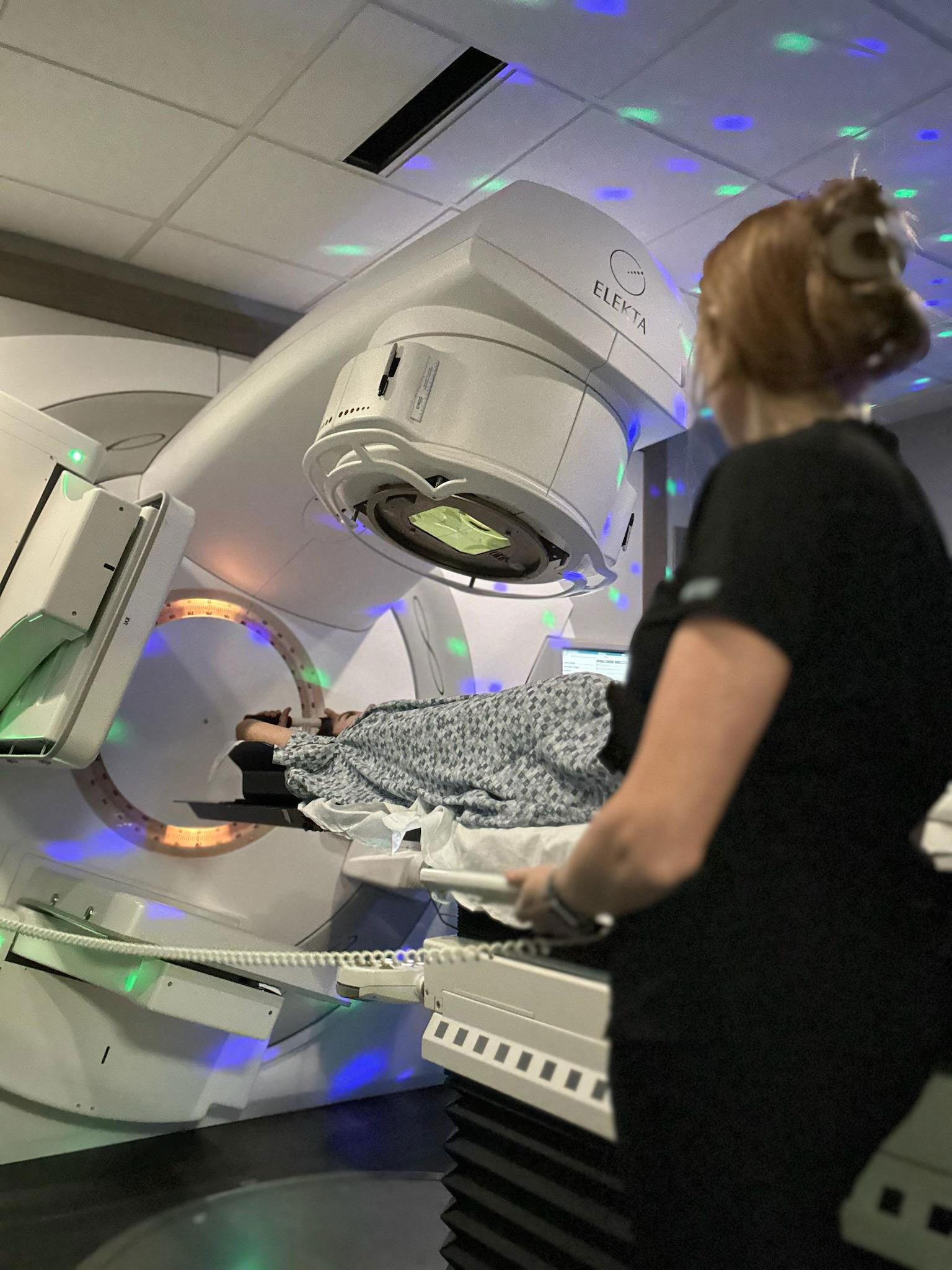
Colon Cancer
Colon cancer is one of the most commonly diagnosed cancers in men and women — and one of the most preventable, because screening finds it early.
About colon cancer
Cancers that start in the colon, rectum or anus are grouped together as colorectal cancers. Together they are the third most commonly diagnosed cancer among men and women. This page focuses on cancer of the colon — the long portion of the large bowel above the rectum.
Some bowel cancers are hereditary. If you or someone in your family has been diagnosed with a colorectal cancer, other family members should be screened. That is especially important if the diagnosis came before age 50, or if several other types of cancer run in your family.
Several things raise your risk. Age is the biggest: colon cancer occurs in younger people but is much more frequent after 50, which is why colonoscopies are recommended around that time. Risk is higher for African-Americans than for other races. Genetic abnormalities passed down through a family raise it further, and the risk climbs when more than one relative has been affected.
Some risk factors are within your control. Low-fiber, high-fat diets are hard on your colon. High insulin levels associated with diabetes have been found to contribute. So does inactivity — making a habit of exercising two or three times a week helps here as it does everywhere else. If you have questions about your own risk, talk with your physician.
Signs and symptoms
Colon cancer can be quiet in its early stages, which is why screening matters. When symptoms do appear, these are the ones to mention to your doctor.
- A lasting change in bowel habits, including diarrhea or constipation
- Blood in the stool, or stools that look dark
- Cramping, gas or abdominal pain that does not go away
- A feeling that your bowel does not empty completely
- Unexplained weight loss
- Weakness, fatigue or low iron
When to call
These symptoms have many possible causes, most of them not cancer. But they are worth a conversation. If something has changed and hasn't resolved, contact your primary care physician — early evaluation is what makes treatment straightforward.
How we treat it
Colon cancer is treated with surgery, radiation therapy and chemotherapy, and often with a combination. What you receive depends on where the cancer started, how far it has advanced and your overall health. Surgery is the most common treatment for colon cancer, removing the affected portion of the large bowel and, where needed, nearby lymph nodes. Radiation therapy delivers concentrated beams to the bowel and pelvis to destroy cancer cells in the treated area, and may be combined with chemotherapy, surgery or both.
External Beam Radiation Therapy
The main form of radiation used for colorectal cancers. A series of daily treatments accurately delivers radiation to the area that needs it, from a machine called a linear accelerator. Because healthy cells can repair radiation damage in a way cancer cells cannot, this approach is comparatively protective of the organs and tissue around the tumor.
3-D Conformal Radiation Therapy (3-D CRT)
Uses CT imaging to build a three-dimensional map of the tumor so the radiation beams can be shaped to match it. Shaping the dose to the target is what keeps it off the healthy structures nearby.
Intensity Modulated Radiation Therapy (IMRT)
A more refined form of shaping. IMRT varies the strength of the beam across the treatment field, allowing your physician to deliver a high dose to the tumor while holding the dose down in sensitive tissue right next to it.
Image Guided Radiation Therapy (IGRT)
Imaging is taken at the treatment machine, at the time of treatment, to confirm the target is exactly where the plan says it should be. This matters in the abdomen and pelvis, where organs shift slightly from one day to the next.
Radiation Combined with Chemotherapy
Chemotherapy uses drugs to fight the growth of cancer cells throughout the body, and is often given alongside radiation or surgery to improve the chance of cure. Your medical oncologist determines which medications and what schedule suit your case, working from the type and stage of your cancer and your overall health.
What treatment involves
Treatment begins with a planning session to map the area to be treated. This usually involves a CT scan. Landmarks are placed on your skin — often tiny tattoos — so the radiation therapists can position you exactly the same way at every appointment.
Treatments are typically given five days a week, Monday through Friday, spread over several weeks. That schedule is deliberate: it lets your physician deliver enough radiation to destroy the tumor cells while giving healthy cells the weekend and the overnight hours to recover.
Each session takes only a few minutes and is painless. You will see your radiation oncologist regularly through the course of treatment so anything that comes up can be handled early.
Possible side effects
Side effects are usually temporary and typically resolve shortly after treatment ends. Tell your care team about any discomfort — managing it is part of the treatment, not an interruption to it.
- Fatigue that builds over the course of treatment
- Loose stools, diarrhea or cramping
- Nausea or reduced appetite
- More frequent or urgent bowel movements
- Irritation of the skin in the treated area
- Bladder irritation when the pelvis is treated
Caring for yourself during treatment
- Rest when you need to, and don't hesitate to ask for help.
- Follow your care team's advice — and ask when anything is unclear.
- Tell us about every medication, vitamin and supplement you take.
- Eat a balanced diet and drink plenty of fluids.
- Treat skin in the treatment area gently: no sun, no hot or cold packs, and only lotions your team has approved.
- Lean on support groups, family and friends. Coping is part of treatment.
Trusted resources
- Colon Cancer Alliance — www.ccalliance.org
- Fight Colorectal Cancer — www.fightcolorectalcancer.org
- American Cancer Society — www.cancer.org
- RT Answers (American Society for Radiation Oncology) — www.rtanswers.org
Clinical background adapted from materials by the American Society for Radiation Oncology (rtanswers.org) and the American Cancer Society.
Cancers We Treat
Talk to a Physician
Most new patients are seen within a few days of referral. Bring your questions — we'll make time for them.
Request an appointmentDiagnosed with colon cancer?
Talk with a board-certified radiation oncologist about whether radiation therapy belongs in your treatment plan.