
Bladder Cancer
Bladder cancer found early is often curable — and for many people it can now be treated without removing the bladder. Here is how radiation therapy fits into that plan.
About bladder cancer
Your bladder sits in the pelvis. It collects and stores urine, and its muscular wall lets it expand and contract. When cancer develops there, what matters most is how deep it has grown into that wall.
Cancer limited to the lining of the bladder is called non-muscle invasive bladder cancer, sometimes called superficial bladder cancer. More than 75 percent of bladder cancer is diagnosed at this stage, and it has an excellent survival rate. Muscle invasive bladder cancer has grown into the layers of muscle in the bladder wall. It is more likely to spread, but it is often still quite curable.
According to the American Cancer Society, more than 500,000 people in the United States are bladder cancer survivors. Bladder cancer is four times more common in men than in women, and two times more common in Caucasians than in African-Americans.
For many years, removing the entire bladder was the only way to treat this disease. Advances in radiation therapy and chemotherapy have changed that. Doctors can now often treat the cancer while preserving the bladder, which allows many people to urinate normally instead of needing surgical reconstruction.
Signs and symptoms
Bladder cancer often announces itself through changes in urination. These symptoms have many causes, most of them not cancer — but they are worth getting checked.
- Blood in the urine, which may look pink, red or rust-colored
- Needing to urinate more often than usual
- A sudden, urgent need to urinate
- Burning or pain when you urinate
- Trouble starting your stream or emptying your bladder completely
- Pain in the lower back or on one side
When to call
These symptoms have many possible causes, most of them not cancer. But they are worth a conversation. If something has changed and hasn't resolved, contact your primary care physician — early evaluation is what makes treatment straightforward.
How we treat it
Your treatment options depend on the type and stage of your cancer, your age and your overall health. Most plans combine more than one approach: surgery to remove the tumor from inside the bladder is usually the first step, and radiation therapy, chemotherapy or immunotherapy may follow. Your radiation oncologist will explain plainly which of these applies to you and why.
External Beam Radiation Therapy
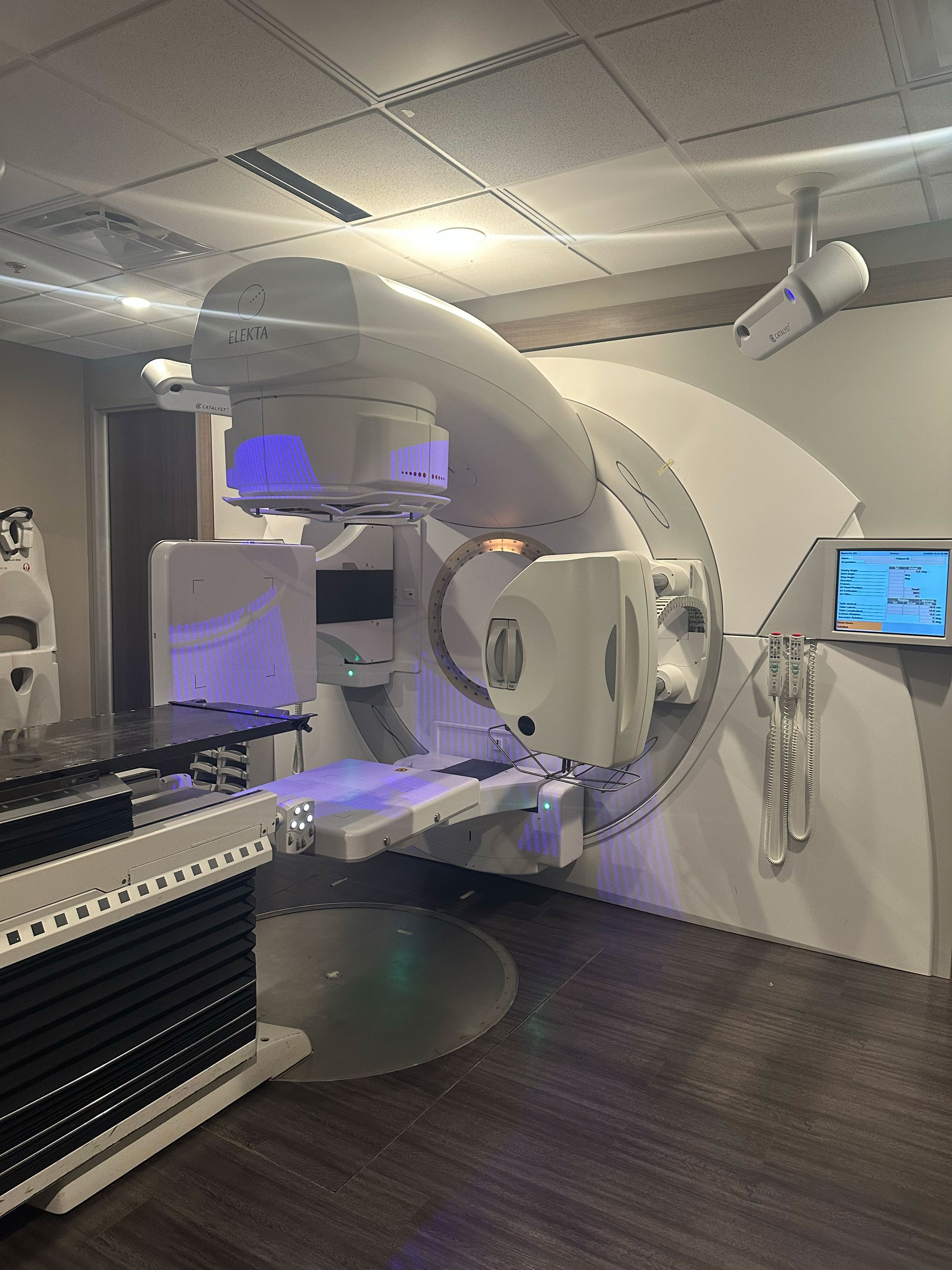
This is the main type of radiation used to treat bladder cancer. Radiation is aimed at the tumor from a machine outside your body, similar in appearance to an X-ray machine. It is often given in combination with chemotherapy. The radiation damages the cancer cells' ability to multiply, and your body clears them naturally as they die.
Bladder-Preserving Chemoradiation
For some people with muscle invasive disease, radiation therapy given alongside chemotherapy can treat the cancer without removing the bladder. This organ-preserving approach allows many patients to keep normal urinary function. Whether it is an option for you depends on the size and location of your tumor and how completely it was removed at your first procedure.
Brachytherapy (Internal Radiation)
Brachytherapy places radioactive material very close to the tumor, through small tubes called catheters or as radioactive pellets. It is used occasionally, in combination with external beam radiation therapy, when your physician wants to concentrate a higher dose in one small area.
What treatment involves
Treatment begins with a planning session called simulation. You will have a CT scan in the position you will be treated in, and your therapists will place small marks on your skin so you can be positioned exactly the same way every day. Nothing about this session is uncomfortable, and no radiation is given.
External beam treatments are usually delivered once a day, Monday through Friday, over several weeks. Spreading treatment out this way lets your physician deliver enough radiation to destroy the tumor cells while giving healthy tissue time to recover in between. The treatment itself takes only a few minutes and is completely painless — most of your appointment is spent getting into position.
You will see your radiation oncologist regularly during your course of treatment so we can track how you are doing and adjust anything that needs adjusting.
Possible side effects
Side effects are usually temporary and typically resolve shortly after treatment ends. Tell your care team about any discomfort — managing it is part of the treatment, not an interruption to it.
- Fatigue that builds gradually over the weeks of treatment
- Needing to urinate more often, or more urgently
- Burning or discomfort with urination
- Loose stools or cramping
- Skin in the treatment area that looks pink or feels dry and tender
Caring for yourself during treatment
- Rest when you need to, and don't hesitate to ask for help.
- Follow your care team's advice — and ask when anything is unclear.
- Tell us about every medication, vitamin and supplement you take.
- Eat a balanced diet and drink plenty of fluids.
- Treat skin in the treatment area gently: no sun, no hot or cold packs, and only lotions your team has approved.
- Lean on support groups, family and friends. Coping is part of treatment.
Trusted resources
- Bladder Cancer Advocacy Network — www.bcan.org
- Bladder Cancer WebCafe — www.blcwebcafe.org
- American Cancer Society — www.cancer.org
- RT Answers (American Society for Radiation Oncology) — www.rtanswers.org
Clinical background adapted from materials by the American Society for Radiation Oncology (rtanswers.org) and the American Cancer Society.
Cancers We Treat
Talk to a Physician
Most new patients are seen within a few days of referral. Bring your questions — we'll make time for them.
Request an appointmentDiagnosed with bladder cancer?
Talk with a board-certified radiation oncologist about whether radiation therapy belongs in your treatment plan.